

Product Management Services
Product Management Services | Product Strategy, Roadmap Planning, Development Management
Bring structure and direction to your product initiatives with experienced product management support across strategy, planning, prioritization, and development.
Talk About Your Product
We only use your info to contact you about your project.
















Why Product Management?
We Are Paid to Remove Scope
An agency that bills for build has every reason to say yes to the whole backlog. A product manager’s hardest job is saying no, so we price the product work separately, and on most engagements the scope we cut pays for the product manager several times over.
Discovery That Actually Kills Ideas
If a discovery process has never stopped a feature from being built, it is theatre. Ours has a real kill rate: roughly a third of what gets proposed does not survive contact with users. Finding that out in two weeks of research costs a fraction of four months of engineering.
Roadmaps as Intent, Not Fiction
Quarterly roadmaps presented as fixed commitments are the fastest way to lose your organisation’s trust, because dates set before the work is understood are guesses. We use Now, Next and Later, and say honestly which items are still bets rather than decisions.
Accountable After Launch
Most engagements end at release, which is exactly when the interesting information arrives. We instrument where a user actually gets value, watch cohort retention rather than vanity totals, and come back with what to change. A launch is a hypothesis, not a finish line.
Services
Our Product Management Services
Work across strategy, discovery, delivery and measurement. Take the whole engagement, or a single piece to fill a specific gap. What changes between them is scope, not the standard we hold the work to.
Product Strategy & Vision
- A written strategy naming target segments, positioning, and where to compete.
- Vision document your board and engineers both read and follow.
- Measurable outcome goals tied to each strategic bet you make.
Product Discovery & Research
- Customer interviews and usability sessions, not opinion surveys or guesswork.
- Tested prototypes that validate demand before engineering commits resources.
- Research findings documented clearly enough to cancel weak features.
Roadmapping & Prioritisation
- Now, Next, Later roadmap with honest confidence levels attached.
- Prioritisation scoring that ties every item to a measurable outcome.
- A written rationale recorded for every sequencing decision made.
Fractional & Embedded Product Managers
- Experienced product managers embedded inside your own delivery team.
- Two days a week or full-time, scaled to your need.
- Senior product leadership without adding permanent headcount or recruiting delay.
Digital Product Development
- Design and engineering delivered with a product manager in the room.
- One team owning discovery, build, and release decisions together.
- Working software shipped in short cycles against agreed outcome goals.
MVP Definition & Launch
- The smallest build that answers your riskiest business question.
- Launch criteria and success metrics agreed before development starts.
- Evidence from real usage decides what version two contains.
Product Analytics & Instrumentation
- Instrumentation that measures the moment of value, not pageviews.
- Cohort retention curves and funnels you can actually act on.
- Event taxonomy documented, versioned, and maintained across every release.
Experimentation & Growth
- A/B tests with sample size and duration calculated beforehand.
- Feature flags and staged rollouts controlling risk during release.
- Clear reporting on what each experiment can and cannot prove.
Pricing, Packaging & Business Model
- Willingness-to-pay research with real buyers, not internal team guesswork.
- Tiering and packaging aligned to how customer value accrues.
- A pricing model tied to your revenue and margin targets.
Product Operations
- Product operations rituals and cadences set up and running.
- One managed intake queue replacing five competing request channels.
- Decision records so product context outlives individual team members.
Service Product Management
- Internal platforms run as products with named accountable owners.
- Service catalogues and roadmaps replacing an endless ticket backlog.
- Adoption and satisfaction measured, then improved release by release.
Product Audit & Team Coaching
- An honest diagnostic on why the product has stalled.
- Hands-on coaching for your in-house product managers and leads.
- A prioritised action plan, then full handover to your team.

Ask what your last three shipped features actually changed.
Book A Free Consultation ›They cut four of the eleven features we came in asking for and showed us the interviews behind each cut. It was uncomfortable and it saved us most of a year.VP Product, B2B SaaS, Toronto
Why Choose AppStudio For Product Management?
Business Priorities
Industry Gaps
Our Proven Advantage
Global Standards. Built-In Trust.
Product discovery means handling other people’s customers and data, so governance matters more here than in a design engagement. Research participants are recruited and consented properly, recordings are stored with retention limits, and analytics are designed to answer product questions without collecting personal information you would then have to defend. All work runs under signed NDAs with IP assignment from day one, mapped against SOC 2, GDPR and Canadian privacy expectations so your legal and security teams can review it quickly.


Book a Free Consultation
Pick a time that suits you. Tell us what the product is meant to achieve and what you have shipped recently, and you will get a straight view on strategy, what is worth researching first, and whether you need a product manager or something else entirely. No charge, no obligation.
A Product Development Agency Clients Come Back To
Teams work with AppStudio because we are willing to argue with the brief and stay accountable after launch. Clutch, DesignRush and GoodFirms rate us among leading development firms. If what you need is build capacity rather than product direction, start with hire app developers or our software product development page instead.



The Product Toolchain We Work In
We work in whatever your team already uses rather than importing our own stack and making everyone learn it. If you have no product management application in place yet, these are the tools we would reach for, and none of them is expensive enough to be the reason a decision goes unmade.
 Dovetail
 Maze
Maze
 Typeform
 Miro
Miro
 User Interviews
 Research Repository
 Amplitude
 Mixpanel
 Google Analytics
 PostHog
 Hotjar
 Looker
 Optimizely
 Feature Flags
 A/B Testing
 Cohort Retention
 Segment
 Metabase
 Jira
Jira
 Linear
 Productboard
 Now Next Later Roadmaps
 Notion
 Confluence
 Figma
Figma
 Framer
 Sketch
 Clickable Prototypes
 Design Systems
 Accessibility Review
 Slack
Slack
 Loom
Loom
 Asana
Asana
 Trello
 Airtable
 Decision Records
How Agile Project Management Benefits Your Organisation, and Where It Stops
Agile project management is good at one thing: getting an agreed scope out predictably, in small increments, with problems surfacing early. If your releases slip and nobody knows why, that discipline is the fix and you should invest there first.
What it cannot tell you is whether the thing was worth building. A team can run flawless sprints for a year and ship a product nobody wants, on time and on budget. AppStudio has been brought in to rescue exactly that more than once: the velocity was fine, the direction was wrong. A project manager is accountable for shipping the agreed thing; a product manager is accountable for whether shipping it was worth doing. If delivery is strong and things still are not working, the gap is almost always product rather than process. Our app consulting page covers the diagnostic side in more depth.
Proven by Results
Roughly a third of proposed features do not survive our discovery.
Book A Free Consultation →years building and managing digital products
research, decision records and code handed over
average client rating across 240 reviews
How We Deliver Value, in Our Clients’ Words
Products We Have Shaped and Shipped

Empowering Future Talent in Trades and Technology
Commissioned by Skills Compétences Canada, we built a national bilingual platform with native apps, a secure CMS, and Canadian cloud infrastructure to promote trades and technology careers at scale.

Digitizing Wildlife Surveillance for National Resilience
For the Canadian Wildlife Health Cooperative, we replaced siloed tools with a cloud-native platform that unifies field reports, lab diagnostics, and cross-province analytics in real time.
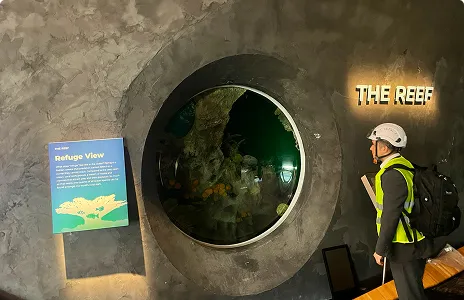
Interactive Learning Through Digital Experience
We unified kiosks, ticketing, and mobile into one cloud-native platform for Seattle Aquarium, raising visitor engagement and streamlining operations across every touchpoint.
Our Portfolio
Products, roadmaps, and launches we have shaped and delivered for clients across Canada and North America.

Mindset is the Ultimate Source for Motivation, Self-development and Wisdom. With Mindset, you can play the world’s best motivational, inspirational and educational audios for free.


As part of the vision 2030, the Kingdom of Saudi Arabia has established a partnership with Zazz to modernize their nation wide mobile apps.
Canada Ontario
Built for the government of Ontario, to champion and stimulate the development of world-class technological and employability skills in Ontario youth.
Get cooking with The Roundup™, the definitive guide to buying, cooking & enjoying North American beef! This app has information on beef cuts, recipes, cooking & cuts videos to help you buy the proper cut and cook it confidently.
The app serves as a one-stop solution for Ontario’s electrical contractor community to organize and manage events, and conferences, talk to other members and share updates.
The Ideal Protein App is the digital pocket companion to the Ideal Protein Protocol. This personalized Protocol assistant is designed to help people achieve their weight loss goals and support a new, healthy lifestyle through three prioprietary phases: Weight Loss, Stabilization, and Maintenance.
Designed & Developed to save lives, and help prevent the spread of COVID 19, by providing the most reliable and up to date information needed by Employers across Canada.
Who We Do Product Work For
Product management earns its cost where the decision about what to build is genuinely uncertain. These are the sectors where we see that most.

SaaS & Software
SaaS & Software
- Pricing and packaging experiments that lift expansion revenue and reduce churn.
- Cohort retention analysis drives roadmap priorities over raw signup counts.
- Usage telemetry and activation funnels define the product-led growth model.

Financial Services
Financial Services
- Discovery runs with compliance and risk teams shaping every requirement.
- Trust and fraud metrics tracked as measurable product outcomes, not features.
- Legacy core banking constraints scoped and sequenced into realistic roadmaps.

Healthcare & MedTech
Healthcare & MedTech
- Clinician shadowing and workflow research replace assumptions about care delivery.
- Adoption and clinical outcomes measured, not deployment or install counts.
- HIPAA privacy and consent flows designed into the discovery phase.

Retail & Commerce
Retail & Commerce
- Conversion research spans discovery, cart, checkout, and post-purchase behavior.
- Store associates treated as a primary user group in requirements.
- Loyalty and margin economics tested through experiments before wide rollout.

Logistics & Supply Chain
Logistics & Supply Chain
- Field research with drivers and warehouse crews grounds every requirement.
- Adoption planned for low-connectivity and high-pressure operational environments in the field.
- Integration with carrier, ERP, and telematics systems validated early.

Manufacturing & Industrial
Manufacturing & Industrial
- Discovery happens on the plant floor with operators and supervisors.
- Internal platforms and tools run as products with real roadmaps.
- Change management and operator training scoped as core product work.

Insurance
Insurance
- Broker, adjuster, and underwriter workflows researched before writing requirements.
- Claims experience measured end to end across intake and settlement.
- Product tiering and pricing decisions supported with actuarial and market data.

Education & eLearning
Education & eLearning
- Learner outcomes and completion rates prioritized over surface engagement metrics.
- Instructor and administrator workflows treated as first-class product requirements.
- Institutional and district buying cycles mapped into release and roadmap plans.

Media & Entertainment
Media & Entertainment
- Retention and churn analysis anchors every roadmap and pricing decision.
- Subscription and bundle packaging researched and tested against willingness to pay.
- Content discovery and recommendation experiments measured against watch time.

Travel & Hospitality
Travel & Hospitality
- Journey research spans booking, travel, and on-property guest experience.
- Ancillary revenue packaging tested across upsell and cross-sell moments.
- Operational reality at the property line reflected in every requirement.

Energy & Utilities
Energy & Utilities
- Field workforce discovery covers technicians, dispatchers, and remote site crews.
- Regulatory and safety constraints scoped honestly into every release plan.
- Long asset and infrastructure lifecycles reflected in multi-year roadmaps.

Public Sector
Public Sector
- Citizen research conducted properly across diverse access needs and channels.
- Accessibility and Section 508 compliance treated as hard requirements.
- Procurement-friendly documentation and evidence produced for every funding milestone.
Choosing Among Product Development Agencies
Comparing product development agencies is unusually hard, because the work that separates a good one is invisible in a portfolio. Every case study shows a product that shipped; none shows the three features that were correctly cancelled or the quarter saved by a research finding nobody wanted to hear.
So ask different questions. Ask for a feature they talked a client out of building, what happened to a product of theirs that failed, how they would know six months after launch whether the work was worth doing, and who owns the research when the engagement ends. Agencies that only do delivery struggle with all four, and the answers reveal genuine product expertise faster than any showreel.
Start with a free consultation, or read about our software product development, MVP development, UI/UX design, app consulting, custom software development, or hire app developers services.
Book A Free Consultation →

Frequently Asked Questions
Tell Us What the Product Has to Achieve.
Get a straight view on strategy, what is worth researching first, and whether the gap is product, process or something else. Book a free consultation with a product lead, not a salesperson.
Book A Free Consultation →
Request a Consultation
Tell us about your product and one of our product leads will come back with a clear view and a plan rather than a brochure.

