
Swift App Development Company
Swift App Development Company | SwiftUI or UIKit Chosen on Evidence, TestFlight to App Store, and Full Code Ownership
Native applications across iPhone, iPad, Mac, Watch, and Vision Pro, so our iPhone app development services and iOS work ship from one Swift codebase. SwiftUI and UIKit, Objective-C migration, Swift 6 concurrency and App Store release, with privacy and review work planned in rather than discovered late.
Talk About Your Swift Project
We only use your info to contact you about your project.






















A Swift App Development Company Built Around the Next OS Release
We Pick SwiftUI or UIKit on Evidence
SwiftUI is version gated: many components need a newer minimum deployment target than your users are on. We check your real install base, then pick per screen, and mixing SwiftUI and UIKit is a normal answer.
Swift 6 Concurrency Handled Deliberately
Strict concurrency checking surfaces data races that used to compile silently. On a mature codebase we stage the migration module by module so releases keep shipping instead of stalling for a quarter.
App Review Is Planned, Not Survived
Privacy manifests, tracking prompts, nutrition labels, and account deletion are handled as part of the build, not discovered at submission. That is why our apps usually clear review on the first pass.
You Own the Code and the Accounts
Repositories, the Apple Developer account, signing certificates, and analytics stay in your name. We hand over build scripts and documentation, not just a compiled binary.
Services
Our Swift Development Services
Custom Swift App Development
- Native iOS apps in Swift, no cross-platform wrappers or embedded web views.
- MVVM or TCA architecture with a documented module and dependency map.
- Source, CI configuration, and architecture decision records handed over.
Swift iOS App Development
- Swift and SwiftUI targeting the iOS versions your analytics show in use.
- StoreKit 2, push notifications, and background task scheduling integrated.
- Deployment target set from your live install base, not the latest SDK.
SwiftUI Development
- SwiftUI screens backed by the Observation framework for state management.
- UIKit interop through hosting controllers where APIs are version gated.
- Reusable components with Dynamic Type, dark mode, and right-to-left support.
Objective-C to Swift Migration
- Module-by-module migration behind bridging headers, releases uninterrupted.
- Objective-C and Swift kept interoperating so the app compiles and ships throughout.
- Test coverage added around each module before it is converted.
iPad, Mac & Wearables
- iPadOS, macOS, watchOS, and tvOS delivered from shared Swift packages.
- Adaptive layouts using size classes and multi-column navigation per device.
- WidgetKit, App Intents, and platform-specific capabilities where they apply.
Server-Side Swift
- Vapor APIs with async routes, Fluent ORM, and token-based authentication.
- Codable models shared between client and server to remove type drift.
- Containerized deployment, with a documented rationale versus Node or Python.
Swift Concurrency Modernisation
- async/await, actors, and structured concurrency adopted incrementally.
- Swift 6 strict concurrency checking enabled one module at a time.
- Data races resolved through Sendable conformance, with regression tests.
App Store Submission & Privacy
- Privacy manifests and required-reason API declarations for every dependency.
- App Tracking Transparency, nutrition labels, and account deletion flows.
- TestFlight staging and review notes prepared for a first-pass approval.
Performance & App Size
- Instruments profiling for launch time, memory, and retain-cycle leaks.
- App thinning, on-demand resources, and asset-catalog optimization.
- Startup and scroll performance validated on the oldest supported device.
StoreKit & Subscriptions
- StoreKit 2 in-app purchases, subscription groups, and promotional offers.
- Server-side receipt validation and App Store Server Notifications.
- Restore-purchase and entitlement sync verified across devices.
Dedicated Swift Team
- Vetted Swift engineers working in your repository and sprint cadence.
- Code review, CI, and your definition of done followed from day one.
- Capacity scaled up for a release and back down afterward, on notice.
Audit & Project Rescue
- Static analysis and architecture review of a stalled Swift codebase.
- Crash-log, memory, and build-configuration triage with a written report.
- A costed fix-versus-rebuild recommendation, with the risks called out.

Ask which iOS versions you have to support before you approve the design.
Book A Free Consultation ›They asked which iOS versions we actually had to support before anyone drew a screen. No agency we had used before started there, and it changed the whole build plan.Director of Digital, Financial Services, Toronto
What to Expect From a Swift Application Development Company
Business Priorities
Industry Gaps
Our Proven Advantage
Global Standards. Built-In Trust.
Apple has made privacy an engineering requirement rather than a policy page, so our iOS app development services build to it. Our Swift developers work under signed NDAs with IP assignment before day one, and we design data handling to the declarations your App Store listing will need: privacy manifests for every third-party SDK, required reason APIs documented, tracking permission handled honestly and account deletion built in where accounts exist. For regulated clients we map that work against SOC 2, GDPR and Canadian privacy expectations so your legal and security teams can review it without a discovery exercise.


Book a Free Consultation
Bring the app you have in mind and the iOS versions your users are on. You will talk to an engineer who does Swift app development day to day, not a salesperson, and leave with a straight read on architecture and scope.
A Swift App Development Agency Clients Come Back To
Product teams work with AppStudio because we work as a custom iOS app development company that scopes against the real install base and stays through App Store review, and independent review boards list us among the development firms Canadian teams shortlist. If you would rather add engineers to your own team than commission a full build, our Swift app developers work inside your process on a month-to-month basis.



The Swift Stack We Build On
Standard Apple tooling, so the iOS development services we deliver can be picked up later by your own team or another agency. Dependencies go through Swift Package Manager rather than CocoaPods, which is now in maintenance mode, and nothing here is locked to us.
 Swift
Swift
 SwiftUI
 UIKit
UIKit
 Objective-C
 Swift Concurrency
 Observation


 SwiftData
Core Data
SwiftData
Core Data
 SQLite
 CloudKit
 Keychain


 Xcode
Xcode
 Swift Package Manager
 XCTest
 Fastlane
 Xcode Cloud
 Swift Testing
 App Store Connect
 TestFlight
 StoreKit
 Privacy Manifests
 Sign in with Apple
 Sentry
Why do You Need Custom Swift App Development?
Most Swift projects that go wrong were written by competent engineers. What sank them was a decision made before the first line of code. A design approved in SwiftUI components that needed a newer minimum iOS version than the user base was on. An Objective-C rewrite attempted in one go, which froze releases for months. Privacy manifests discovered during the final week before a launch date that had already been announced. AppStudio treats those as the real project risks, because they are the ones that cost quarters rather than sprints.
Custom Swift app development earns its cost when the app is central to your business rather than a brochure. Deep platform integration, offline behaviour that actually works, performance on older devices, and a codebase your own engineers can take over. Where those things do not matter much, we will tell you that a cross-platform build or even a good mobile web experience is the more sensible spend.
We are also honest about scope. A fair number of first conversations end with us proposing something smaller than what was asked for, because shipping a focused version and learning from real users beats a large release built on assumptions. If you would rather add engineers to your own team than hand over a project, our Swift app developers cover that model instead.
Twelve Years Shipping Apple Apps
A TestFlight build on your own phone every two weeks.
Book A Free Consultation →years of Swift app development for Apple platforms
week TestFlight builds you install yourself
source, certificates and account ownership handed over
How We Deliver Value, in Our Clients’ Words
Apps and Platforms We Have Delivered

Empowering Future Talent in Trades and Technology
Commissioned by Skills Compétences Canada, we built a national bilingual platform with native apps, a secure CMS, and Canadian cloud infrastructure to promote trades and technology careers at scale.

Digitizing Wildlife Surveillance for National Resilience
For the Canadian Wildlife Health Cooperative, we replaced siloed tools with a cloud-native platform that unifies field reports, lab diagnostics, and cross-province analytics in real time.
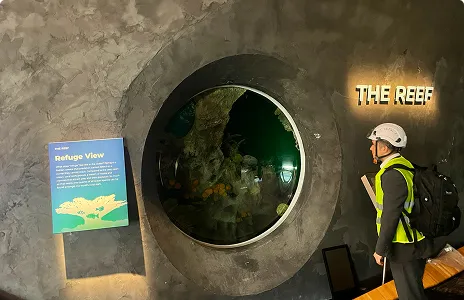
Interactive Learning Through Digital Experience
We unified kiosks, ticketing, and mobile into one cloud-native platform for Seattle Aquarium, raising visitor engagement and streamlining operations across every touchpoint.
A Glance at Our Portfolio
See the design and engineering depth behind the applications we have delivered for clients.

Mindset is the Ultimate Source for Motivation, Self-development and Wisdom. With Mindset, you can play the world’s best motivational, inspirational and educational audios for free.


As part of the vision 2030, the Kingdom of Saudi Arabia has established a partnership with Zazz to modernize their nation wide mobile apps.
Canada Ontario
Built for the government of Ontario, to champion and stimulate the development of world-class technological and employability skills in Ontario youth.
Get cooking with The Roundup™, the definitive guide to buying, cooking & enjoying North American beef! This app has information on beef cuts, recipes, cooking & cuts videos to help you buy the proper cut and cook it confidently.
The app serves as a one-stop solution for Ontario’s electrical contractor community to organize and manage events, and conferences, talk to other members and share updates.
The Ideal Protein App is the digital pocket companion to the Ideal Protein Protocol. This personalized Protocol assistant is designed to help people achieve their weight loss goals and support a new, healthy lifestyle through three prioprietary phases: Weight Loss, Stabilization, and Maintenance.
Designed & Developed to save lives, and help prevent the spread of COVID 19, by providing the most reliable and up to date information needed by Employers across Canada.
Industries Our Swift App Developers Build For
Native Swift earns its cost where platform integration, performance, or offline behaviour matter, which is why our iOS application development services concentrate on these sectors. These are where we see that need most often.

Financial Services
Financial Services
- Face ID and Keychain login with encrypted local session tokens.
- Offline-safe transaction queuing that reconciles balances once connectivity returns.
- Apple Pay and Wallet card provisioning with tokenized payment credentials.

Healthcare & MedTech
Healthcare & MedTech
- HealthKit vitals sync with Bluetooth glucose and heart monitors paired.
- PHI encrypted in Core Data with Keychain protected access controls.
- Clinician charting on iPad with Apple Pencil annotation and dictation.

Retail & Commerce
Retail & Commerce
- StoreKit subscriptions and Apple Pay checkout with saved shipping addresses.
- Offline catalogue browsing with cart state synced across signed-in devices.
- In-store associate iPad apps for inventory lookup and mobile checkout.

SaaS & Software
SaaS & Software
- Native iOS companion sharing Swift packages with your existing web codebase.
- Push notifications and background refresh keeping dashboards current between sessions.
- TestFlight beta rings and MDM managed distribution for enterprise rollouts.

Logistics & Field Work
Logistics & Field Work
- Offline-first route data with Core Data sync when signal returns.
- Barcode scanning through camera with location capture for proof of delivery.
- Battery-aware background tasks batching GPS pings across long driver shifts.

Manufacturing & Industrial
Manufacturing & Industrial
- Rugged iPad floor apps reading Bluetooth sensors and machine telemetry.
- Offline work orders synced through Core Data across plant network limits.
- Barcode and NFC part scanning tied to maintenance and inspection logs.

Media & Entertainment
Media & Entertainment
- AVFoundation streaming with FairPlay DRM and offline download management.
- tvOS and CarPlay playback extensions with AirPlay handoff between devices.
- StoreKit subscription tiers and Apple Pay tickets with Wallet passes.

Travel & Hospitality
Travel & Hospitality
- Wallet boarding passes and hotel keys with Apple Watch access.
- Offline itineraries in Core Data with push updates for gate changes.
- Apple Pay booking and check-in flows with Face ID confirmation.

Education & eLearning
Education & eLearning
- iPad-first lessons with Apple Pencil markup and Shared iPad support.
- Offline course content and progress synced through Core Data automatically.
- MDM managed distribution with Apple School Manager and Classroom controls.

Insurance
Insurance
- Camera-based claims capture with photo metadata and location stamping.
- Field adjuster tools working offline with Core Data document sync.
- Face ID secured policy documents stored in encrypted Keychain vaults.

Energy & Utilities
Energy & Utilities
- Field inspection on iPad reading SCADA data through cached endpoints.
- Offline meter readings synced via Core Data when coverage returns.
- Bluetooth sensor pairing for pipeline and grid asset inspections.

Public Sector
Public Sector
- VoiceOver accessibility and Dynamic Type meeting WCAG procurement requirements.
- MDM managed distribution with Canadian data residency for citizen apps.
- Face ID secured access with Keychain stored credentials and audit logs.
How to Choose a Swift App Development Company
Every portfolio shows polished screenshots, and none of them show the codebase behind those screens, so a studio can ship something that looks superb and leave you with a project no other team can maintain. Ask the questions that surface that gap: what minimum iOS version they would target and why, how they would handle an Objective-C module, and who holds the Apple Developer account and signing certificates.
We work with teams looking for iOS app development Canada wide, and as an app development company in Canada we are glad to be judged on those answers. Many first calls end with us recommending a smaller release, or a cross-platform approach, when that serves the product better than a full native build.
Book a Free Swift Architecture Review →

Frequently Asked Questions
Tell Us What the App Has to Do.
You get a straight read on architecture, SwiftUI versus UIKit, scope, and what App Store review will require, from an engineering lead who has shipped Apple apps.
Book a Free Swift App Consultation →
Request a Consultation
Tell us about your Swift project and one of our engineering leads will come back with a scope and a figure rather than a brochure.
